
As I chopped the vibrant vegetables and unrolled the sweet potato noodles, a wave of excitement washed over me. Japchae, or Korean Stir-Fried Glass Noodles, has quickly become a staple in my kitchen, and it’s easy to see why. This delightful dish combines tender beef and a colorful medley of fresh veggies, all enveloped in slightly sweet, chewy noodles that are both gluten-free and adaptable for any palate. One of the best things about this recipe is its quick prep time, making it a perfect weeknight dinner option, and it also shines at potlucks, inviting friends and family to gather around the table. Ready to whip up a batch of this irresistible dish? Let’s dive into the details of making the perfect Japchae that will please even the pickiest eaters!
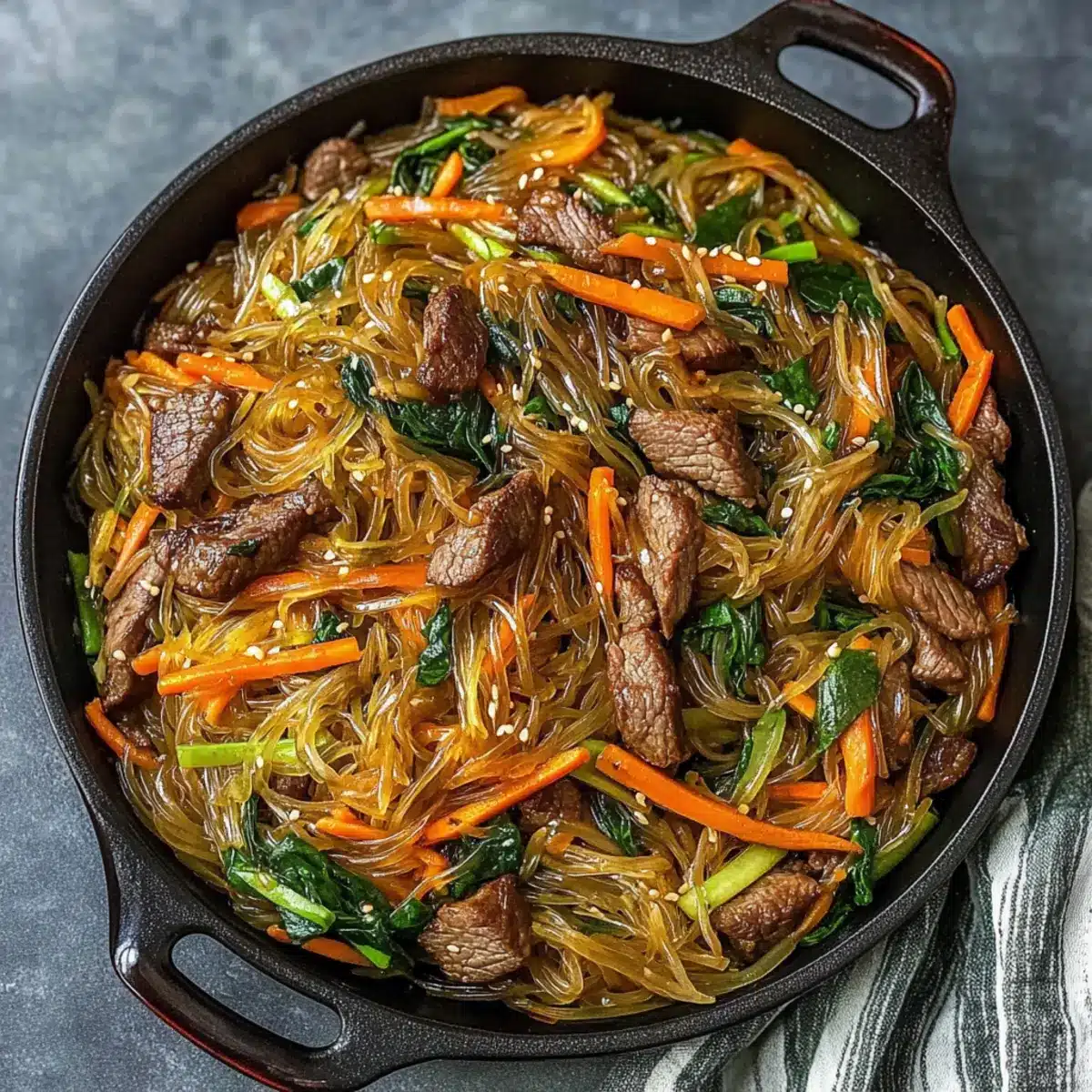
Why Is Japchae So Popular?
Vibrant Colors: The stunning array of vegetables not only makes Japchae visually appealing but also adds a delightful crunch.
Quick Prep Time: This dish comes together in a matter of minutes, perfect for busy weeknights or spontaneous gatherings.
Versatile Ingredients: Feel free to swap in chicken or tofu, or add your favorite veggies for a personalized twist.
Gluten-Free Goodness: Made with sweet potato noodles, it’s a fantastic option for those with gluten sensitivities, allowing everyone to enjoy.
Crowd-Pleasing Flavor: With its sweet and savory profile, Japchae appeals to a wide range of tastes, making it ideal for parties and family dinners. Explore more about easy Asian recipes to keep your meal repertoire fresh!
Korean Stir-Fried Glass Noodles Ingredients
For the Beef
- Beef – Use pre-sliced beef for authentic flavor or thinly sliced sirloin for a homemade touch.
For the Noodles
- Sweet Potato Noodles – The star of this dish, these naturally gluten-free noodles offer a unique chewy texture and subtle sweetness.
For the Vegetables
- Carrots – Cut into matchsticks to add crunch and sweetness, balancing the dish’s flavors.
- Onion – Use white onions, sliced into long strips to enhance the dish’s aromatic quality.
- Green Onions – Chop both white and green parts for added freshness and garnish.
- Garlic – Fresh pressed garlic will elevate the dish with its mouthwatering aroma.
- Spinach – This leafy green not only adds nutrition but also a vibrant pop of color.
For the Oils
- Sesame Oil – Offers a nutty flavor that elevates the dish; substitute with peanut oil if needed.
- Olive Oil – Ideal for cooking, it can be swapped with your preferred oil for sautéing.
For the Sauce
- Soy Sauce – Provides that beloved umami flavor; use coconut aminos for a gluten-free option.
- Brown Sugar – Adds a touch of sweetness to balance out the savory notes; choose light or dark based on your preference.
Get ready to experience the joy of making Korean Stir-Fried Glass Noodles—it’s a delicious adventure waiting to happen!
Step‑by‑Step Instructions for Korean Stir-Fried Glass Noodles
Step 1: Prepare Ingredients
Start by slicing your beef into thin strips, making sure they’re uniform for even cooking. Next, julienne the carrots into matchsticks and slice the onion into long strips. Chop the green onions, both white and green parts, and press the garlic. Gather your sweet potato noodles, spinach, soy sauce, brown sugar, sesame oil, and olive oil to have everything ready for your flavorful Korean Stir-Fried Glass Noodles.
Step 2: Cook Noodles
In a large pot, bring water to a boil over high heat, adding a sprinkle of salt. Once boiling, stir in a splash of olive oil and the sweet potato noodles, cooking them for 5–6 minutes until they’re tender but still chewy. Drain the noodles in a colander and rinse under cold water to stop the cooking process. Set them aside, ready to absorb the delicious flavors in your Japchae.
Step 3: Cook Beef
Heat a large skillet or wok over medium-high heat and add a drizzle of olive oil. Once hot, add the pre-sliced beef in an even layer, stirring occasionally until it’s golden brown and cooked through, about 3–4 minutes. Season the beef with half of the soy sauce, sesame oil, and brown sugar, stirring to combine all the flavors. This will create a beautifully rich base for your Korean Stir-Fried Glass Noodles.
Step 4: Sauté Vegetables
In the same skillet, add a bit more olive oil, then toss in the carrots and onion. Sauté these vegetables for about 3–4 minutes until they soften and become fragrant. Add the remaining soy sauce, sesame oil, pressed garlic, and green onions, continuing to stir-fry for another 2–3 minutes. The vibrant colors will start to shine, inviting you to the next step of this delightful dish!
Step 5: Combine Ingredients
Now it’s time to create your Japchae masterpiece! Add the spinach to the skillet and stir until it just wilts, which should take about 1–2 minutes. Next, gently toss the cooked sweet potato noodles into the skillet with the beef and vegetable mixture, ensuring all ingredients are well combined. Stir everything together, allowing the noodles to soak up the flavors of the sauce.
Step 6: Serve
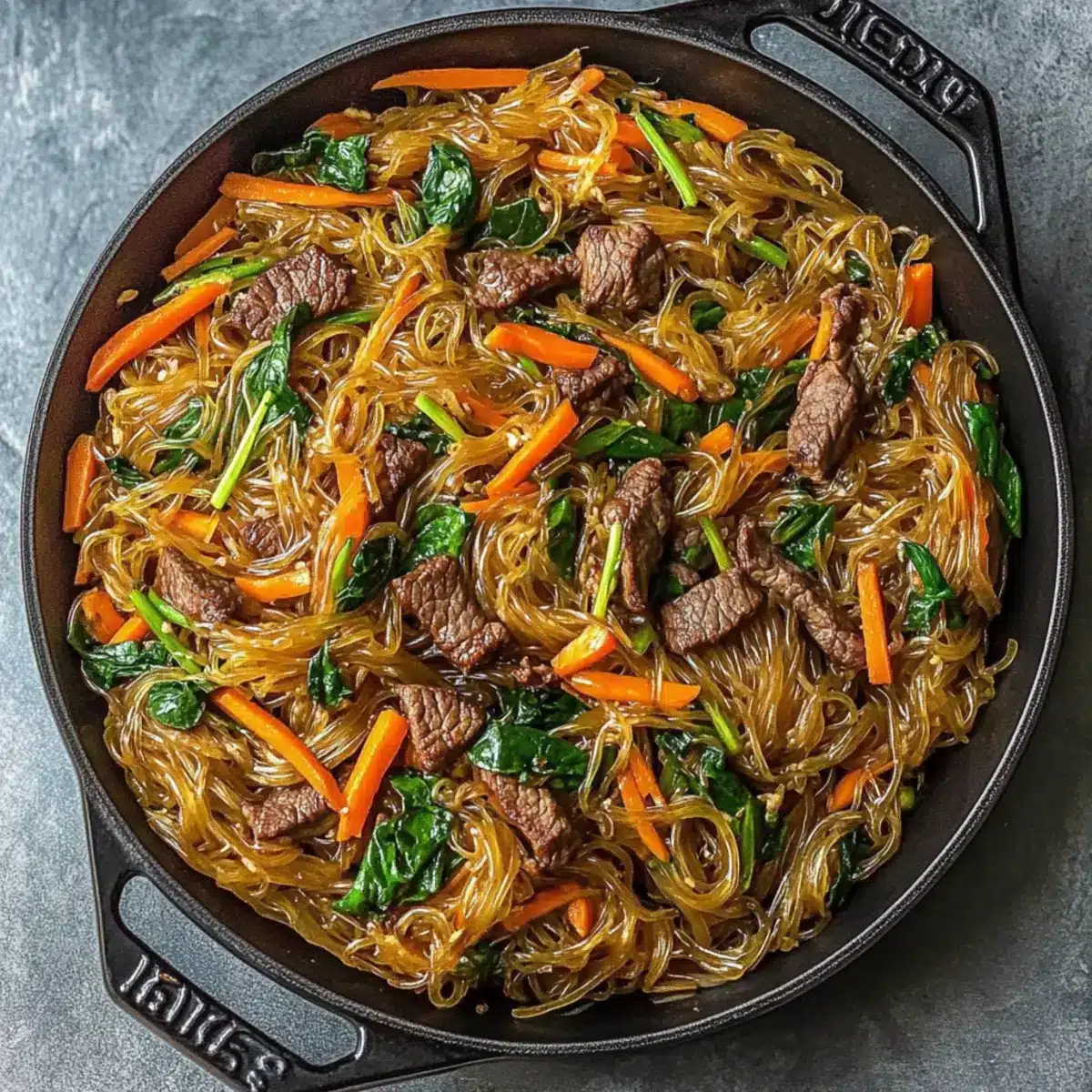
Your delicious Korean Stir-Fried Glass Noodles are now ready to enjoy! Serve warm, garnished with additional chopped green onions if desired. This dish shines on its own or pairs beautifully with a fresh salad, perfect for potlucks or family gatherings. With its stunning presentation and delectable flavors, everyone will be reaching for seconds!
Make Ahead Options
These Korean Stir-Fried Glass Noodles are perfect for meal prep enthusiasts! You can prepare the beef and vegetables up to 24 hours in advance by slicing them and storing them separately in airtight containers in the refrigerator to keep them fresh and vibrant. Additionally, you can cook the sweet potato noodles and store them with a light drizzle of oil to prevent sticking. When you’re ready to serve, simply sauté the beef and vegetables, toss them together with the noodles, and add the sauces for a quick finish. This way, you’ll have a delightful dish that stays just as delicious while saving valuable time on busy weeknights!
Expert Tips for Korean Stir-Fried Glass Noodles
-
Ingredient Quality: Always opt for fresh vegetables and good-quality beef to enhance the flavors of your Korean Stir-Fried Glass Noodles.
-
Timing Matters: Avoid overcooking the vegetables; they should remain vibrant and crispy to deliver a delightful contrast in texture.
-
Noodle Prep: For the best texture, cook the sweet potato noodles just until tender and rinse under cold water. This prevents mushiness and helps them absorb flavors better.
-
Taste as You Go: Adjust the amount of brown sugar based on your personal taste; this balance is key to the sweet-savory profile of the dish.
-
Garnish for Flavor: Don’t skip the chopped green onions as a garnish; they add a fresh finishing touch that elevates the dish.
-
Leftover Storage: If you have extra, store the noodles separately from the beef and veggies. This prevents sogginess when reheating.
What to Serve with Delicious Japchae: Korean Stir-Fried Glass Noodles
As you prepare to savor this flavorful dish, consider complementing your meal with tasty sides that highlight its vibrant flavors.
-
Sesame Green Beans: Lightly sautéed with sesame oil and garlic, these green beans add a crisp texture and nutty flavor that pairs beautifully with the sweet potato noodles.
-
Cucumber Salad: A refreshing salad made with sliced cucumbers, rice vinegar, and a sprinkle of sesame seeds. Its cool crunch is a delightful contrast to the warm Japchae.
-
Korean BBQ Chicken: Juicy, marinated chicken grilled to perfection adds protein and a smoky layer of flavor, enhancing the overall experience of the meal.
-
Kimchi: The traditional Korean side dish brings spicy and tangy notes that beautifully balance the sweetness of the Japchae, enriching your dining experience.
-
Miso Soup: A warm cup of miso soup provides comforting umami flavors, making it a soothing and traditional accompaniment to any Korean meal.
-
Steamed Dumplings: Filled with your choice of meat or vegetables, these offer a great texture and flavor, making them wonderful little bites alongside the noodles.
Sit down, enjoy the colorful spread, and let the comforting, rich flavors of your meal create lasting memories!
How to Store and Freeze Japchae
Fridge: Store leftovers in an airtight container for up to 3 days. To enjoy the best flavor, reheat on the stovetop, adding a splash of water to keep the noodles moist.
Freezer: Freeze portions of cooked Korean Stir-Fried Glass Noodles in resealable freezer bags for up to 2 months. Lay flat to save space and defrost overnight in the fridge before reheating.
Reheating: When ready to eat, gently heat on medium in a skillet with a little olive oil and water, stirring frequently until warmed through. This helps restore the noodles’ chewy texture.
Prep Ahead: If planning to make ahead, store the noodles separately from the beef and vegetables to maintain freshness and avoid mushiness when reheated.
Korean Stir-Fried Glass Noodles Variations
Feel free to mix things up and personalize your Japchae experience with these delightful variations!
-
Beef-Free: Substitute with chicken or tofu for a lighter version that suits different dietary preferences. Both options carry the sauce beautifully while adding their unique flair.
-
Veggie Extravaganza: Toss in bok choy, mushrooms, or bell peppers for added nutritional value and a burst of colors. Each new veggie can enhance the flavor profile and add interesting textures.
-
Spicy Kick: Add sriracha or chili paste to the sauce for an extra zing that spice lovers will adore. Just remember, a little goes a long way!
-
Soy Sauce Swap: For a gluten-free twist, use coconut aminos in place of traditional soy sauce. This alternative provides a slightly sweeter flavor and is a hit with many!
-
Nutty Addition: Incorporate toasted sesame seeds as a garnish for added crunch and a lovely nutty flavor that ties the dish together. They add such a nice finishing touch when sprinkled on top!
-
Sweet Twist: If you want a hint of tropical flavor, substitute brown sugar with honey or maple syrup. This adds a lovely sweetness and can brighten the overall dish.
-
Herb Boost: Fresh herbs like cilantro or basil can be a refreshing garnish. They not only enhance the flavor but also lend an inviting aroma.
-
Texture Play: Add more protein variety by mixing in cooked shrimp or crab meat, which can bring a whole new level of seafood-inspired flavors to your Japchae.
Get creative and explore the joy of making easy Asian recipes by experimenting with these delightful variations!
Korean Stir-Fried Glass Noodles Recipe FAQs
How do I choose the right sweet potato noodles?
Absolutely! When selecting sweet potato noodles for your Japchae, look for brands that specifically state they are made from sweet potatoes and are gluten-free. They should be smooth and somewhat translucent in appearance. Avoid any with dark spots or unusual textures, as these may indicate older or less desirable noodles.
Can I store leftovers, and for how long?
Very! You can store leftovers of your Korean Stir-Fried Glass Noodles in an airtight container in the fridge for up to 3 days. Just make sure they are fully cooled before sealing them up to maintain their texture. When reheating, adding a splash of water will help keep the noodles from drying out.
Is it possible to freeze Japchae?
Absolutely! To freeze your Korean Stir-Fried Glass Noodles, portion them into resealable freezer bags. Make sure to lay the bags flat to save space in your freezer. They can be stored for up to 2 months. When ready to enjoy, defrost them overnight in the fridge, then gently reheat in a skillet with a bit of olive oil and water to restore their chewy texture.
What can I do if my noodles seem mushy when reheating?
No worries! If your noodles have become mushy, try reheating them over medium heat in a skillet with a little olive oil and a small amount of water. Stir gently to break them apart and create a balance in texture. You can also add a splash of soy sauce or sesame oil during reheating to enhance flavor while restoring some of their original texture.
Are there any dietary considerations to keep in mind?
Definitely! For those with gluten sensitivities, using gluten-free soy sauce or coconut aminos is a perfect alternative. If you’re preparing this dish for family pets, be cautious as the soy sauce can be harmful to dogs and cats. Always check for allergies related to vegetables or other ingredients, especially for your guests.
Can I make this dish vegan?
Very! To adapt your Korean Stir-Fried Glass Noodles into a vegan dish, simply replace the beef with tofu or additional vegetables. Keep the rest of the recipe the same, ensuring to use plant-based alternatives for the sauce like coconut aminos. This way, everyone can enjoy a delightful and inclusive meal!
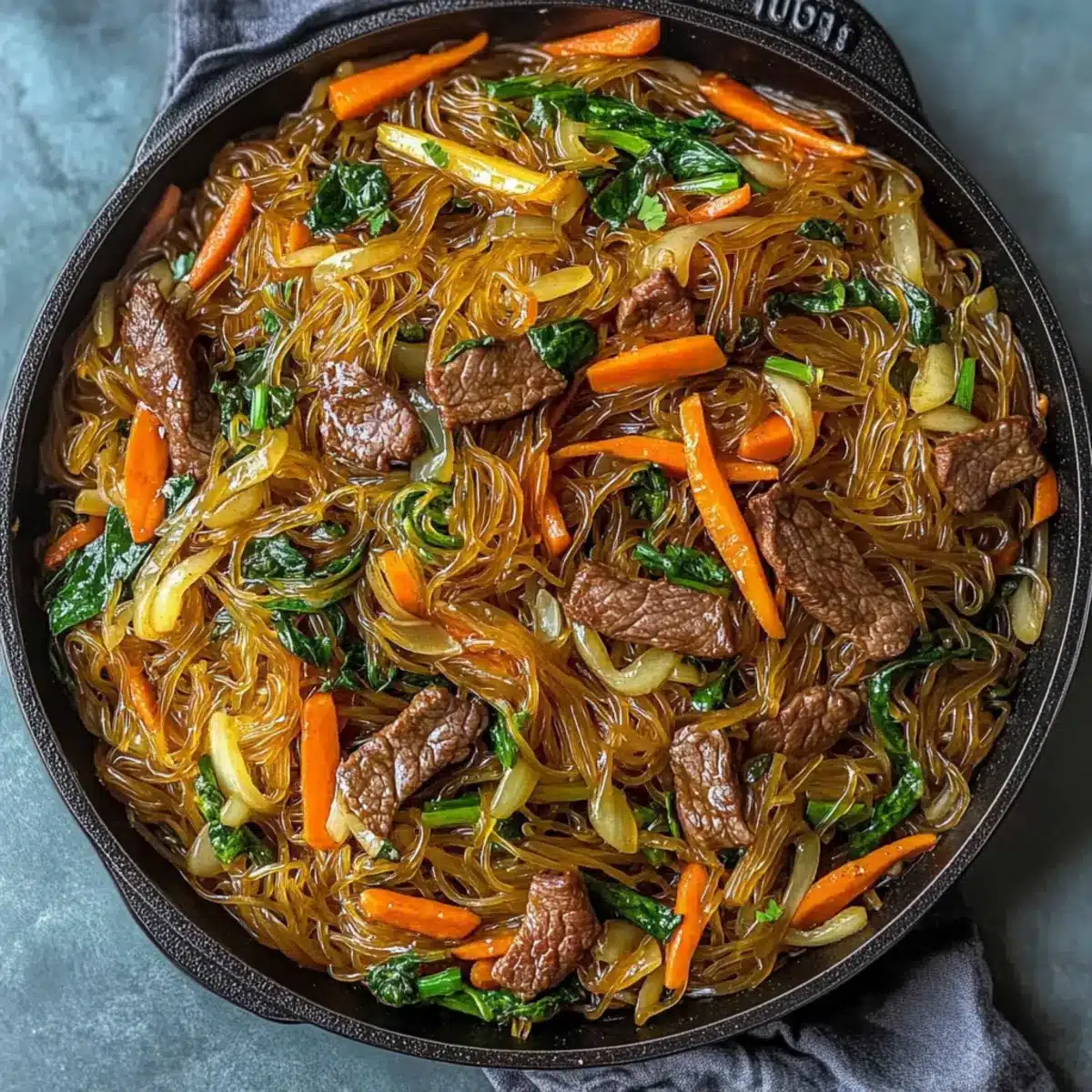
Savory Korean Stir-Fried Glass Noodles with Colorful Veggies
Ingredients
Equipment
Method
- Start by slicing your beef into thin strips, julienne the carrots into matchsticks, and slice the onion into long strips. Chop the green onions and press the garlic. Gather your sweet potato noodles, spinach, soy sauce, brown sugar, sesame oil, and olive oil.
- In a large pot, bring water to a boil, adding a sprinkle of salt. Stir in a splash of olive oil and the sweet potato noodles, cooking for 5–6 minutes until tender but chewy. Drain and rinse under cold water.
- Heat a skillet or wok over medium-high heat with olive oil. Add the beef in an even layer, stirring until golden brown, about 3–4 minutes. Season with half of the soy sauce, sesame oil, and brown sugar.
- In the same skillet, add more olive oil and toss in the carrots and onion. Sauté for about 3–4 minutes, then add the remaining soy sauce, sesame oil, pressed garlic, and green onions. Stir-fry for another 2–3 minutes.
- Add the spinach and stir until it wilts, about 1–2 minutes. Toss the cooked sweet potato noodles into the skillet with the beef and veggies, ensuring everything is well combined.
- Serve warm, garnished with additional chopped green onions if desired. This dish shines on its own or pairs beautifully with a fresh salad.
Leave a Reply